
Why International Conferences Matter More Than We Often Admit
In academic circles, international conferences are sometimes spoken of with a certain casualness. They are described as routine academic obligations, networking opportunities, or at worst academic tourism. This view, while not entirely unfounded, misses something more fundamental. For many researchers, particularly those working outside well funded institutions or dominant scholarly centres, conferences remain one of the most consequential gateways into global knowledge production.
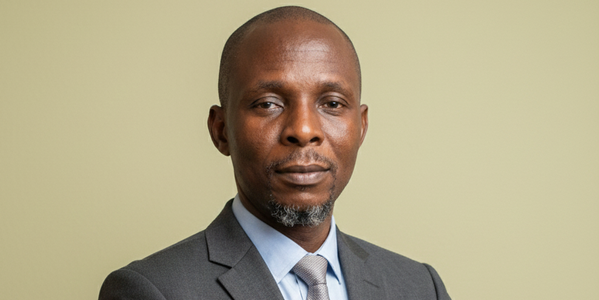
Saheed Akinola Esq
In academic circles, international conferences are sometimes spoken of with a certain casualness. They are described as routine academic obligations, networking opportunities, or at worst academic tourism. This view, while not entirely unfounded, misses something more fundamental. For many researchers, particularly those working outside well funded institutions or dominant scholarly centres, conferences remain one of the most consequential gateways into global knowledge production.
It is arguable that international conferences now perform a role that journals alone can no longer fully discharge. They are spaces where ideas are tested before publication, where emerging scholars encounter senior voices on roughly equal footing, and where intellectual reputations are quietly formed long before formal citations accumulate. In practice, many collaborations, edited volumes, visiting fellowships, and even grant opportunities begin not with a published article but with a fifteen or twenty minute paper delivered to a room of peers.
From my own experience, and from observing colleagues across different jurisdictions, the invitation to present a paper often carries significance far beyond the conference itself. It may be the basis for an official invitation letter required for visa applications. It may determine whether institutional funding is released. In some cases, it becomes the first formal recognition that a researcher’s work is considered relevant beyond national or regional boundaries. These practical consequences are rarely acknowledged openly, yet they shape academic mobility in very real ways.
This is particularly true for researchers from the Global South. While the internationalisation of scholarship is frequently celebrated in principle, access to global platforms remains uneven in practice. Conferences, for all their imperfections, still offer one of the more transparent entry points into international academic spaces. There is no guarantee of acceptance, but there is at least a process. And that process begins with the abstract.
The abstract occupies a peculiar position in academic writing. It is neither the paper itself nor a mere formality. It is a compressed argument, a declaration of intent, and in many cases a silent audition. Reviewers rarely have the luxury of extensive deliberation. They must decide, often quickly, whether a proposed paper is sufficiently clear, relevant, and promising to justify a place on the programme. It follows that an abstract does not simply describe a topic. It makes a case for inclusion.
There is, however, a persistent misunderstanding among many capable researchers that a good paper will speak for itself. In conference selection, this assumption is risky. Reviewers do not assess the unseen paper. They assess the abstract. Where the abstract is unfocused, overly cautious, or poorly aligned with the conference theme, the paper may never be considered, regardless of its eventual quality.
It is also worth noting that conference abstracts are reviewed within particular intellectual and institutional contexts. What counts as originality may differ between disciplines. What appears methodologically sound in one jurisdiction may raise questions in another. The authorities are not always settled, and expectations vary. A well written abstract therefore reflects not only confidence in one’s argument, but also an awareness of audience, context, and scholarly convention.
For these reasons, learning how to write an abstract that speaks effectively to international conference reviewers is not a peripheral skill. It is part of the craft of modern scholarship. It requires judgment rather than formula, strategy rather than embellishment, and clarity rather than excess.
This series proceeds from a simple but often neglected premise. Ideas do travel, but they rarely travel on their own. They are carried through structures, processes, and texts. The conference abstract is one such text. Treating it with the seriousness it deserves may not guarantee acceptance, but it meaningfully improves the odds. For many researchers, that difference is where the journey begins.
Adekunle Saheed Akinola is a researcher with expertise in international environmental law and policy, focusing on the right to development, the transition to a green economy, and the rights of indigenous communities. He also specializes in comparative international human rights, particularly women’s and minority rights, as well as international investment law. Adekunle provides mentorship to early researchers and students in research paper writing, drafting conference abstracts, and developing Master’s and PhD theses. He is committed to helping scholars communicate their ideas clearly, structure their work effectively, and navigate academic submissions with confidence.
Contact:
Email: choicelandsolicitors9@gmail.com
Mobile: +2348032493960
ORCID: https://orcid.org/0009-0007-5346-8773
About Author