
ICPC Clears Presidency in Fake Agency Probe, Recommends Prosecution of Alleged PFIPC Promoter
The ICPC has cleared the Presidency in the alleged fake agency scandal, recommending the prosecution of PFIPC promoter Adeniyi Adeyemi over forgery allegations while investigations continue into how the purported council gained official recognition and government administrative access.
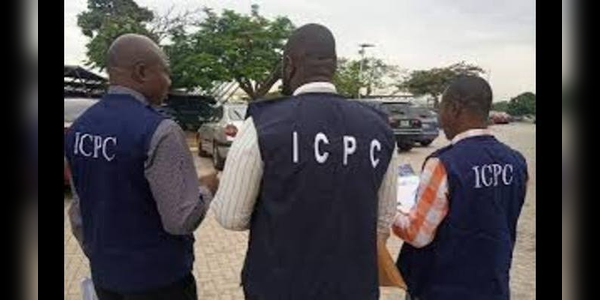
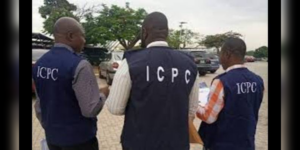
The Independent Corrupt Practices and Other Related Offences Commission (ICPC) has exonerated the Presidency from any involvement in the controversial Presidential Foreign Investment Promotion Council (PFIPC) saga, while recommending the prosecution of the council’s alleged promoter, Adeniyi Adeyemi, over allegations of forgery, impersonation and related offences.
The anti-corruption agency presented its interim investigation report to President Bola Ahmed Tinubu at the Presidential Villa, Abuja, concluding that neither the Presidency nor any lawful government authority established the purported agency.
ICPC: PFIPC Was Never Created by the Federal Government
Addressing journalists after submitting the report, ICPC Chairman Dr. Musa Adamu (SAN) said investigators found that the PFIPC had no legal foundation and was never established through an Act of the National Assembly, an Executive Order or any recognised government instrument.
According to the commission, the appointment letter allegedly identifying Adeyemi as Director-General of the council was forged and did not originate from the Presidency.
The ICPC further alleged that the suspect created additional fictitious government agencies using forged documents and legislative instruments, including the FCT Investment Promotion Agency and the Foreign Investment Promotion Agency/Public-Private Partnership, which were allegedly used to open bank accounts and conduct unauthorised activities.
No Federal Funds Diverted, Presidency Cleared
The commission said its investigation found no evidence that Federal Government funds were released to the alleged fake agency.
It also stated that investigators found no security breach involving either the Presidency or the Central Bank of Nigeria during the period under review.
However, the ICPC noted that weaknesses in document verification, inter-agency coordination and administrative oversight across several Ministries, Departments and Agencies (MDAs) enabled the alleged scheme to operate undetected for some time.
Among the institutions identified were the Office of the Secretary to the Government of the Federation, the Office of the Head of the Civil Service of the Federation, the Office of the Accountant-General of the Federation, the Budget Office and the National Information Technology Development Agency (NITDA).
ICPC Recommends Criminal Charges and Institutional Reforms
Based on its findings, the anti-graft agency recommended the criminal prosecution of Adeyemi while calling for administrative sanctions against public officials whose negligence may have contributed to the operation of the alleged fake agency.
The commission also urged the Federal Government to strengthen internal verification systems and improve coordination among government institutions to prevent similar incidents.
According to the ICPC, investigations remain ongoing to identify possible collaborators and gather additional evidence before formal charges are filed.
House Committee Postpones Adeyemi’s Interrogation
Meanwhile, proceedings before the House of Representatives Ad Hoc Committee investigating the PFIPC were stalled after Adeyemi declined to answer questions in the absence of his legal representatives.
The committee subsequently adjourned the session until Monday after the embattled promoter insisted that any questioning should take place publicly and in the presence of his lawyers and members of the media.
His legal team argued that since allegations against him had been made in public, he should equally be allowed to defend himself in an open hearing.
State House Rejects Link to Budget Code Request
At the National Assembly, officials of the State House denied authorising the creation of the PFIPC or requesting the Office of the Accountant-General of the Federation to issue a budget code for the council.
The Director of Administration, Abdulkadri Idris, who represented the Permanent Secretary, told lawmakers that the Presidency had no knowledge of the council before reports surfaced in the media.
He also dismissed documents purportedly issued by the State House as fraudulent, explaining that the office and official whose names appeared on the documents did not exist within the Presidency.
FRSC Explains Allocation of Official Number Plates
The Federal Road Safety Corps (FRSC) also defended its decision to issue seven official government vehicle number plates to the PFIPC.
The Corps said it relied on documents presented by the applicant, verification of a government-domain website and physical inspection of an office operating from the Federal Secretariat in Abuja before approving the request.
The FRSC, however, admitted it later discovered that the council was not a legally recognised Federal Government agency and has begun steps to retrieve all official number plates issued to the organisation.
Investigation Continues
The House of Representatives committee is expected to conclude its investigation next week as lawmakers seek to determine how the alleged fake agency gained access to official government processes, secured recognition from public institutions and appeared in aspects of the 2026 Appropriation framework.
The committee is also examining allegations that the PFIPC received a ₦1.3 billion budget allocation, while separate criminal proceedings against Adeyemi on charges including conspiracy, forgery and impersonation are already pending before the Federal High Court in Abuja.
About Author