
US Airstrikes in Sokoto and the Uneasy Questions of Sovereignty and Civilian Cost
The reported airstrikes in parts of Sokoto State have reopened difficult questions about security, sovereignty, and civilian safety. Claims of operational success sit uneasily alongside the absence of verified casualty figures and growing unease in affected communities. While foreign military intervention may offer short-term gains, it raises deeper concerns about dependence and accountability. Ultimately, lasting security will depend on rebuilding state capacity and public trust, not air power alone.
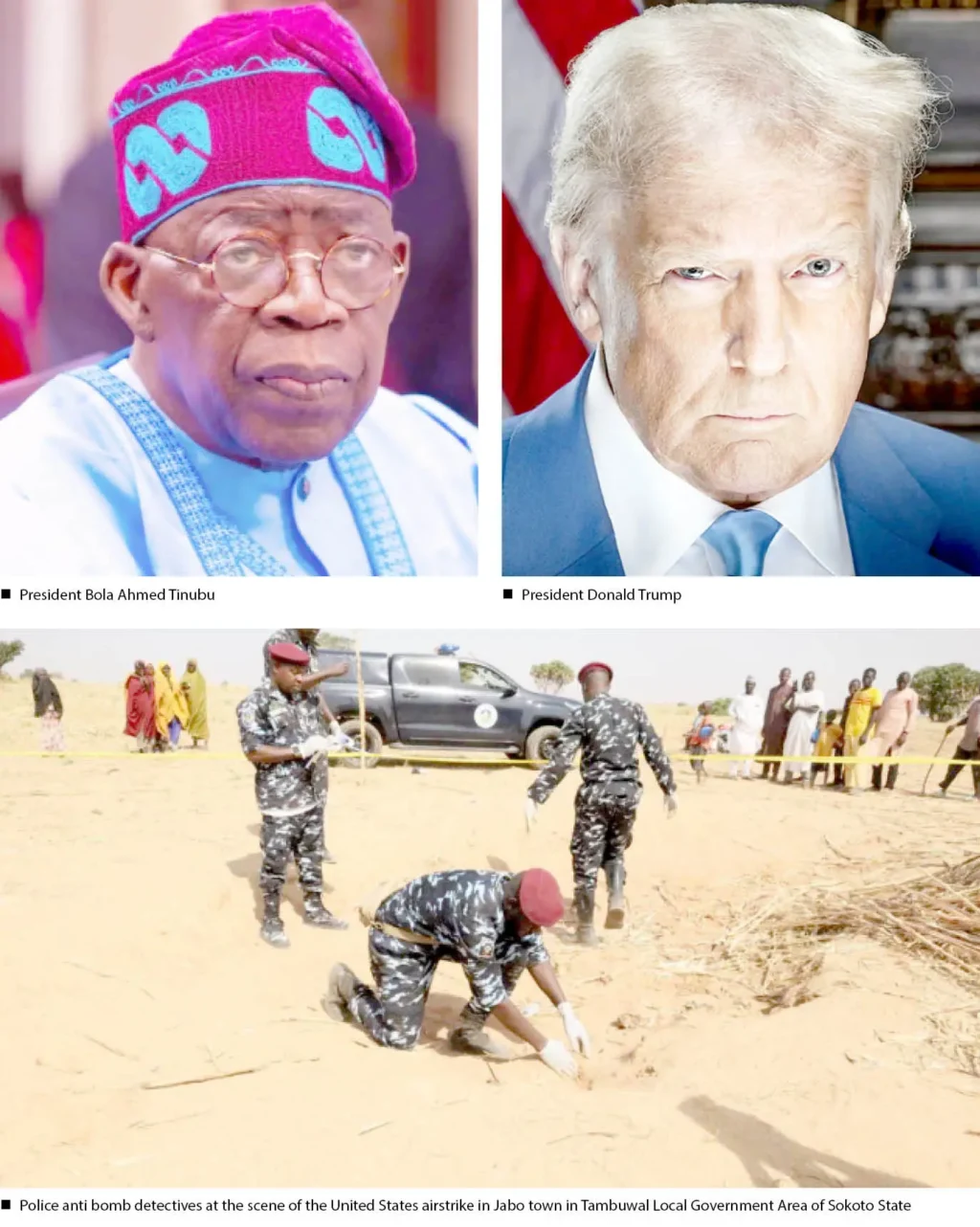
Reports of United States airstrikes in parts of Sokoto State have reopened difficult questions about security, sovereignty, and the human cost of counterterrorism operations in Nigeria. According to detailed reporting by Daily Trust, the strikes, which occurred late on Thursday in the mountainous areas of Tangaza Local Government Area, were aimed at camps believed to be occupied by armed groups recently redesignated as terrorists.
Security sources cited by Daily Trust described the operation as a success, particularly in areas long regarded as safe havens for the Lakurawa group. Officials spoke of decimated camps and fleeing fighters, even as visual evidence of the operation’s outcome remained unavailable days after the strikes. The absence of official footage or casualty figures has fed both cautious optimism and public skepticism, especially in a country accustomed to conflicting narratives around military operations.
What complicates the situation further are emerging accounts from residents in and around the affected communities. While local government officials in Tangaza confirmed that the strikes targeted forest enclaves and terrorist camps, they also acknowledged injuries, even if no fatalities had yet been officially recorded. Daily Trust also reported complaints from residents of nearby areas such as Tambuwal, where shrapnel and explosives reportedly landed on farmlands and residential spaces that had not previously experienced security threats. These accounts raise the uncomfortable possibility that civilians may have been affected, directly or indirectly, by an operation conducted far above their villages and farms.
The involvement of the United States adds another layer to the debate. Former President Donald Trump publicly claimed responsibility for the strikes, framing them as decisive actions against Islamic State elements targeting Christians in northwestern Nigeria. Statements from US Africa Command, as reported by Daily Trust, confirmed that the operation was carried out in coordination with Nigerian authorities and that initial assessments suggested multiple militants were killed. Yet, for many Nigerians, coordination does not erase concerns about national sovereignty or the message such foreign-led operations send about the capacity of Nigeria’s own security forces.
Reactions across the country, as documented by Daily Trust, have been mixed. In Sokoto, residents reportedly continued their daily routines, even as prayers were offered and security patrols intensified. In parts of Borno State, however, fear took hold. Villagers near Lake Chad spoke of considering relocation after sighting military aircraft, worried that their communities might become the next targets in a widening aerial campaign. The psychological impact of air power, particularly in regions already traumatized by years of insurgency, should not be underestimated.
Public figures have also weighed in. Senator Ali Ndume called for the extension of joint US-Nigeria operations to the North East, arguing that such collaboration could weaken Boko Haram and ISWAP strongholds. Others were less enthusiastic. A former Nigerian ambassador described the strikes as a troubling unilateral action, while security analysts questioned whether reliance on foreign firepower reflects a deeper failure of governance and military strategy.
The Sokoto airstrikes, as reported by Daily Trust, thus sit at the intersection of necessity and unease. Few Nigerians dispute the need to dismantle armed groups that have terrorized communities for years. Yet the method matters. Precision, accountability, and transparency are not optional extras in counterterrorism operations. They are essential if civilian trust is to be preserved and if military success is to mean more than the temporary dispersal of fighters.
As Nigeria continues to confront insecurity on multiple fronts, the events in Tangaza should prompt sober reflection rather than triumphal declarations. Foreign assistance may offer short-term gains, but long-term stability will depend on rebuilding state capacity, protecting civilians, and ensuring that the fight against terrorism does not deepen the sense of vulnerability among the very people it claims to defend.
Source: Daily Trust, “US airstrikes: Casualties likely in Sokoto,” December 29, 2025.
About Author