
NCC trains journalists on new trends in Telecoms, ICT
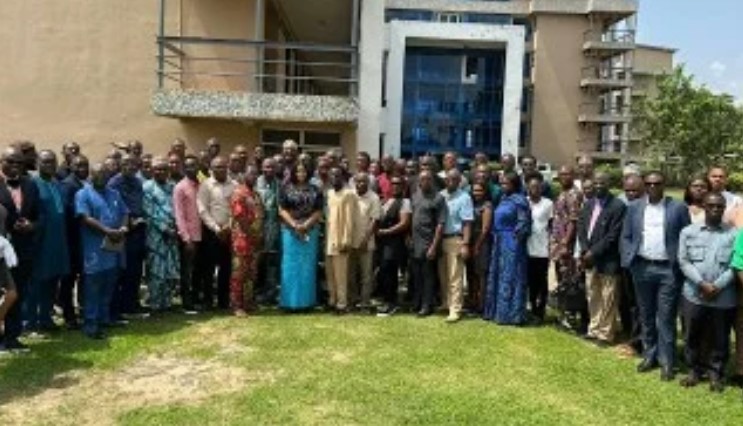
The Nigerian Communications Commission (NCC) began a two-day upskilling programme for select media practitioners on emerging trends in telecoms and Information Communication Technology (ICT) on Thursday.
According to the Commission, the training programme was designed to keep telecoms and ICT reporters abreast of emerging trends, regulatory developments, and prospects in the telecoms industry.
The training, held in Lagos, featured different sessions by senior officials from selected departments of the Commission and experts in relevant fields.
In his opening remarks, NCC Director of Public Affairs, Reuben Mouka, said the training was in line with the vision of the Executive Vice Chairman/CEO, Dr Aminu Maida, to ensure that its stakeholders and media partners learn, relearn and are well equipped with relevant knowledge and skill sets required to do their jobs effectively and efficiently.
In her lecture, “Overview of the Nigerian Telecoms Industry and the Roles of the NCC,” Nwanko Okorie said the NCC’s responsibility as a regulatory agency is to protect younger operators and ensure that giant operators do not stifle them out of the market.
She said the Commission should allow for healthy competition and discourage monopoly in the telecommunications industry.
Okorie disclosed that, as of September 2024, there are 153 million GSM subscribers in the country.
“Many people will question why we have 153m subscribers from the previous 198m. This is because of the SIM-NIN linkage. When we did that SIM-NIN linkage, we discovered that so many numbers were not in use.
“So when we now deactivated those numbers, the number of subscribers came down to 153 million and the broadband penetration of the 3G and 4G is about 41.66 per cent.
“The telecoms industry has contributed about 16 percent of the GDP. Some people will tell you that telecommunication is the next oil,” she said.
Other speakers talked about various topical issues, including data journalism and visualization tools, consumers and data usage, connectivity and resilience, and digital economy, among others.
About Author