
By The Telescope Desk
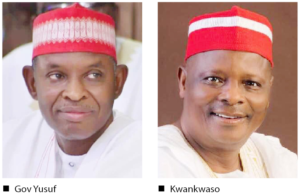
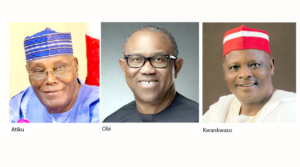
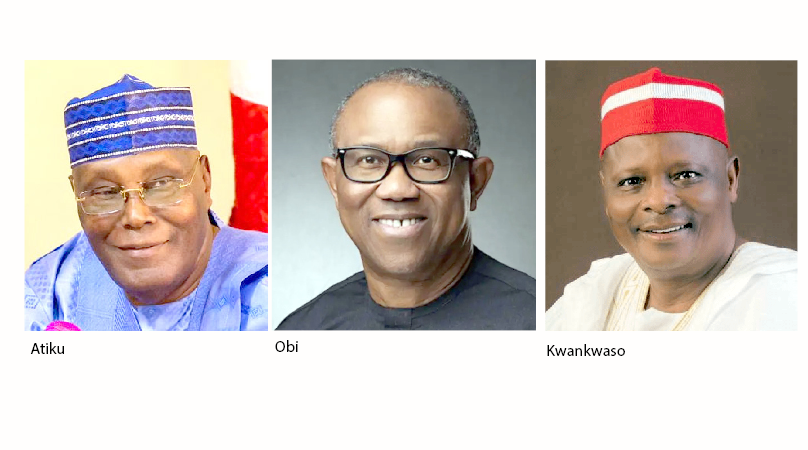
Fresh indications suggest that a joint presidential ticket involving former Labour Party candidate Peter Obi and ex–Kano State governor Rabiu Musa Kwankwaso is being actively explored ahead of the 2027 general elections, potentially setting up a contest with former Vice President Atiku Abubakar for the presidential ticket of the African Democratic Congress (ADC).
The move is part of renewed efforts to forge a united opposition front capable of mounting a credible challenge to President Bola Ahmed Tinubu.
Obi and Kwankwaso, who ran on the platforms of the Labour Party (LP) and the New Nigeria People’s Party (NNPP) respectively in the 2023 election, previously attempted to form an alliance. That effort collapsed over disagreements on the presidential and vice-presidential slots.
Lessons From 2023
The renewed talks are informed by the electoral dynamics of the last election. Obi polled over six million votes nationwide, winning in Lagos, the Federal Capital Territory and all South-East states, while galvanising a strong youth-driven movement across major cities. Kwankwaso, on the other hand, secured a decisive victory in Kano State, consolidating his grip on one of Nigeria’s largest voting blocs through the Kwankwasiyya movement.
Sources familiar with the negotiations say former President Olusegun Obasanjo is playing a behind-the-scenes role in reconciling both camps. Obasanjo is reportedly convinced that an Obi–Kwankwaso ticket would significantly strengthen the opposition’s chances in 2027.
Multiple sources claim Obasanjo has tentatively persuaded Kwankwaso to consider accepting the vice-presidential slot.
ADC Strategy and Atiku Factor
Obi formally joined the ADC in late 2025 and has publicly indicated interest in contesting the 2027 election. Kwankwaso, who remains in the NNPP, told supporters over the weekend that he was engaged in consultations and would soon announce his political direction.
A close aide to Kwankwaso confirmed that “high-level discussions with key stakeholders across the political spectrum” were ongoing, stressing that Nigeria urgently needs a shift from the current climate of insecurity and systemic breakdown.
Sources say two strategic options are under consideration. The first is to challenge Atiku directly at the ADC presidential primaries with a united Obi–Kwankwaso front.
“The belief is that neither Obi nor Kwankwaso can defeat Atiku alone at the primaries, but together they may stand a chance,” a source said, noting Atiku’s strong grip on the party structure.
A fallback plan reportedly involves securing an alternative political platform should the ADC primaries prove unfavourable.
Kwankwaso Sets Conditions
Speaking to supporters, Kwankwaso said any merger or coalition must come with a clear offer of either the presidential or vice-presidential slot.
“At the national level, our hope is to merge with others, but anyone who wants us must agree that I will be number one or number two,” he said.
He also denied reports of plans to defect to the ruling All Progressives Congress (APC), insisting that the NNPP has national spread beyond Kano State.
Analysts Weigh In
Political analysts say the Obi–Kwankwaso ticket draws strength from complementary regional appeal but caution that Atiku’s presence could complicate opposition unity.
Professor Abubakar Kari of the University of Abuja described the potential ticket as “mouthwatering,” citing Obi’s urban and youth mobilisation and Kwankwaso’s northern influence.
However, he warned that opposition fragmentation could again undermine electoral chances if Atiku emerges as the ADC candidate and the others exit the party.
Dr Sam Amadi of the Abuja School of Political and Social Thought added that the ticket’s viability would depend on broader northern alliances.
“If the ticket secures backing from key northern power brokers, it could become a serious threat to President Tinubu,” he said.
As consultations intensify, the shape of the opposition—and the ADC ticket—remains one of the most closely watched developments ahead of 2027.
About Author