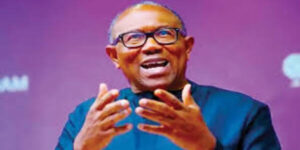
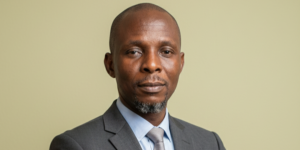
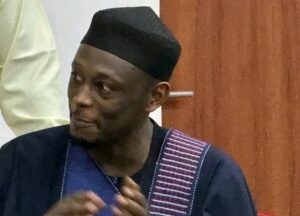
Political alignments ahead of the 2027 general election are beginning to crystallise, with strong indications that a joint presidential ticket involving Peter Obi and Rabiu Musa Kwankwaso is taking shape under the African Democratic Congress.
Investigations indicate that discussions between the former Labour Party presidential candidate and the ex governor of Kano State have moved beyond exploratory talks. Both camps have reportedly constituted a joint committee to work out the structure, strategy and internal negotiations required to actualise a shared ticket on the platform of the ADC.
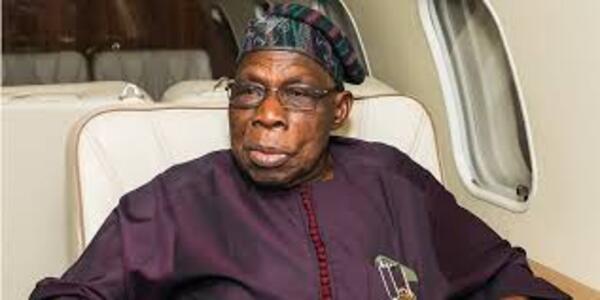
Multiple party insiders confirm that the idea of an Obi–Kwankwaso alliance did not emerge organically but was actively encouraged by former President Olusegun Obasanjo. According to senior figures familiar with the process, Obasanjo endorsed Obi’s movement into the ADC and urged him to build a working partnership with Kwankwaso, with the aim of securing the party’s presidential and vice presidential slots.
Obasanjo’s interest in Obi’s political trajectory is well established. During the 2023 election cycle, the former president openly supported Obi and campaigned across several parts of the country on his behalf against the eventual winner, President Bola Tinubu. In a widely circulated letter at the time, Obasanjo argued that while no candidate was without flaws, Obi possessed a comparative advantage in character, discipline, competence and preparedness for the task of governance.
Kwankwaso also has a longstanding relationship with Obasanjo, having served as Minister of Defence during Obasanjo’s second term in office. In contrast, relations between Obasanjo and his former vice president, Atiku Abubakar, have remained strained, with the former president making little effort to conceal his lack of enthusiasm for Atiku’s renewed presidential ambition.
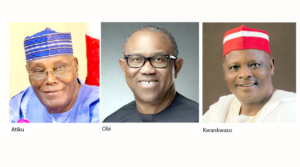
At present, Atiku, Obi and former Minister of Transportation Rotimi Amaechi are all identified as presidential aspirants within the ADC. Efforts are ongoing to formally bring Kwankwaso into the party, although his political movement has yet to complete that step. Before leaving his former party, Obi had publicly pledged to serve only a single term if elected president, a position that reportedly made it easier for Kwankwaso to consider the vice presidential role.
Sources close to the negotiations say Obasanjo has gone further by quietly linking Obi with influential northern political figures to build trust and buy in for the proposed alliance. Party officials describe the former president as deeply invested in seeing the arrangement succeed.
Leaders within the Kwankwasiyya Movement also acknowledge Obasanjo’s role, confirming that he initiated the conversations that brought both camps together and continues to offer guidance as discussions progress.
Committee work underway
The joint committee set up by Obi and Kwankwaso is said to have been inaugurated about a month ago. Its mandate includes harmonising interests within the ADC, managing internal resistance and developing a shared campaign framework.
Magaji Ibrahim, SAN, a senior figure in the Kwankwasiyya Movement and National Legal Adviser of the New Nigeria Peoples Party, confirmed his membership of the committee. He stated that Kwankwaso was prepared to work with Obi in either position on the ticket, emphasising that the overriding objective was national recovery rather than personal ambition.
He added that conversations between ADC leaders and the Kwankwasiyya Movement on Kwankwaso’s possible defection were ongoing, although no final meeting had yet been held. Ibrahim was, however, clear that anything short of the vice presidential slot would be difficult for Kwankwaso’s camp to accept.
While attempts to reach Obasanjo’s media aides for comment were unsuccessful, individuals within his inner circle privately confirm that he remains actively engaged in efforts to ensure the alliance materialises, even if he prefers to operate behind the scenes.
Mixed signals within ADC
Despite these developments, the ADC leadership has adopted a cautious public posture. The party’s spokesperson, Bolaji Abdullahi, said the party was not formally aware of any alliance between Obi and Kwankwaso, although he described both men as valuable political assets. He noted that any discussions currently taking place were outside the party’s official structures.
Atiku’s camp has also played down the significance of the talks. His spokesperson, Paul Ibe, insisted that the former vice president does not feel threatened by any emerging alliance and remains focused on his own political journey. According to him, Atiku views the entry of other political heavyweights into the ADC as part of a broader effort to address what he described as Nigeria’s existential challenges.
Grassroots reactions have been more enthusiastic. Leaders of the Obidient Movement have welcomed the prospect of cooperation between Obi and Kwankwaso, arguing that a functional relationship between their respective support bases could become a formidable electoral force if properly managed.
Zoning debate resurfaces
Alongside alliance talks, internal debates over zoning have intensified. Supporters of Obi within the ADC are increasingly calling for the party’s presidential ticket to be zoned to the South, arguing that such an approach would maximise the chances of defeating President Tinubu in 2027.
Some party leaders strongly disagree. State chairmen and senior officials warn that pushing zoning at this stage could fracture the coalition and inadvertently strengthen the incumbent. They argue that Nigeria’s current crisis requires a focus on competence and national rescue rather than regional calculations.
As negotiations continue behind closed doors, one thing is clear. The ADC is fast becoming a central arena for opposition realignments, and the decisions taken in the coming months will shape the contours of the 2027 contest.